
Air conditioning for schools, installed in the holidays and inspected to TM44
Air conditioning for schools means cooling the rooms that overheat or hold heat-producing equipment, such as classrooms, IT and server rooms, staff rooms and halls, and we install, maintain, repair and inspect it. Our engineers fit systems during the summer holiday, service them on a PPM schedule, and carry out the TM44 inspection that the law requires where a school’s systems total more than 12kW. We are approved by Daikin, Mitsubishi and Samsung, and we have maintained air conditioning across Chichester College Group for over 20 years.
Cooling that suits a school building and a school calendar
Schools rarely need air conditioning everywhere. They need it in the rooms where heat builds up or where equipment has to stay cool, and they need it installed without losing teaching time. We survey the room, size the system to the heat load, and programme the install for the summer holiday. Once it is running, a PPM schedule keeps it efficient, and our inspection covers the TM44 duty.
- Classroom and hall cooling using split, multi-split and VRF systems from Daikin, Mitsubishi and Samsung
- IT, comms and server room cooling, including resilient duty and standby arrangements
- Staff room, office, library and reception cooling
- Installation planned for the summer holiday, half-terms and weekends
- PPM servicing, F-Gas leak checks and repairs, with 24/7 emergency cover for contract clients
- TM44 inspections and reports for systems over the 12kW threshold
Where schools use air conditioning, and how we handle it
Each room type has different needs, so we treat them separately.
Classrooms that overheat
Top-floor classrooms, rooms with large south-facing glazing and modular buildings can build up heat that pupils and staff feel by early summer. Before specifying cooling, we check whether ventilation, shading or controls would solve it, because they can be cheaper to run. Where cooling is right, we size the system to the room and place the units to avoid noise and draughts at desk height.
School ventilation and BB101IT and server rooms
Network cabinets and server rooms need cooling all year, including when the school is closed. We design them with standby capacity, so one failed unit does not take the room offline, and with alarms where the school wants them. Our server room page covers the options in more detail.
Server room air conditioningStaff rooms and offices
Admin offices, reception areas and staff rooms are often cooled by older split units that have been added over the years. We survey what is there, repair or replace failing units, and rationalise the estate under one maintenance schedule.
Halls and large spaces
Assembly halls, dining halls and sports halls need larger systems or ducted systems designed around the volume of air. We assess the options with ventilation and heating in mind, so the cooling works with the plant already there.
Installation in the holidays
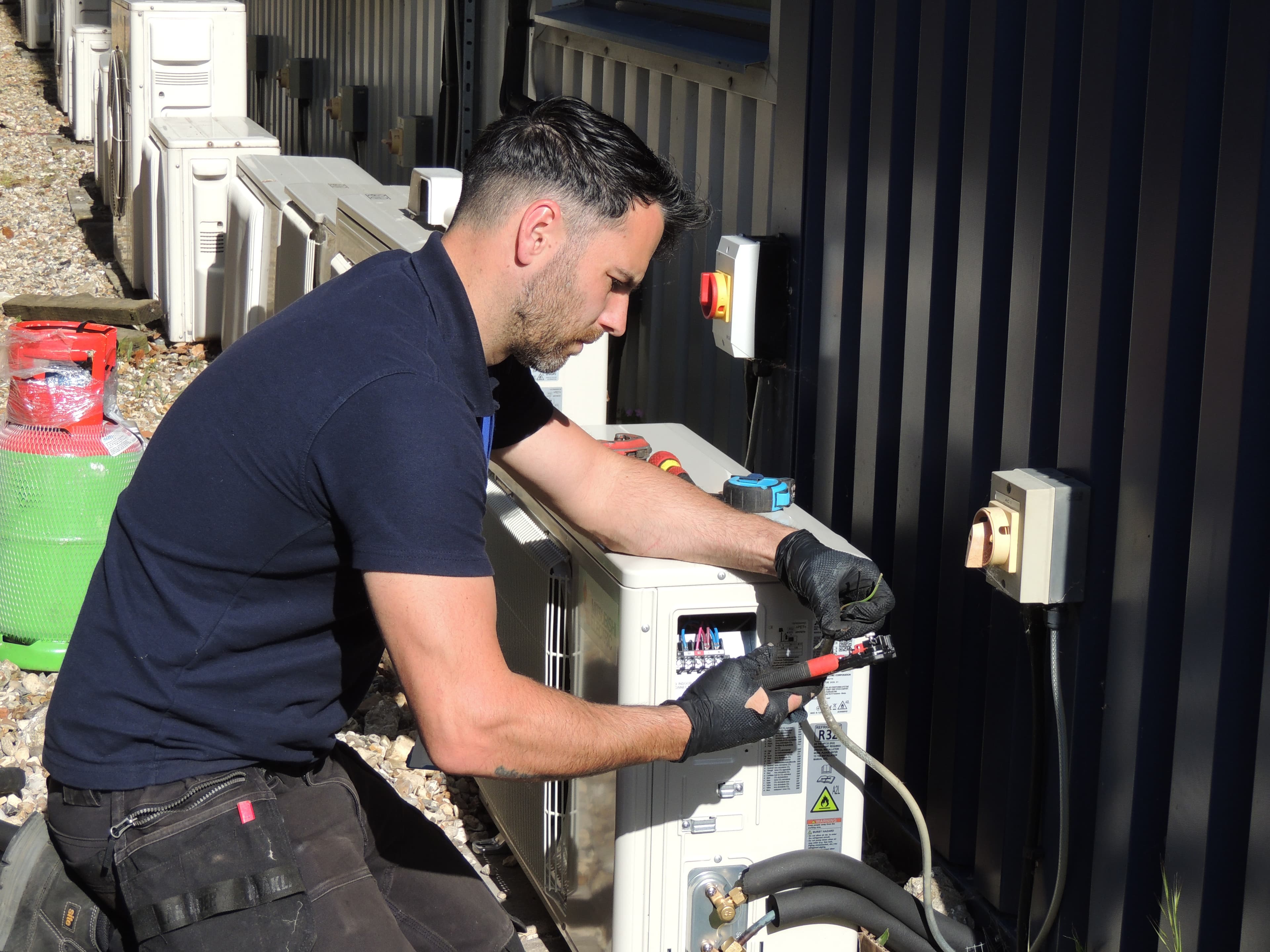
Most school air conditioning is installed in the summer holiday, which means the order, access and any electrical work are fixed in the spring. We agree the programme with your site manager, work around other contractors, and commission before pupils return.
Maintenance and repair
School systems that are filtered, cleaned and leak-checked on a PPM schedule are less likely to fail in the first hot week. For contract clients we provide 24/7 emergency cover. If your units are not under contract, we can survey them and propose a schedule.
PPM and planned maintenanceChichester College Group: air conditioning maintained across 11 campuses
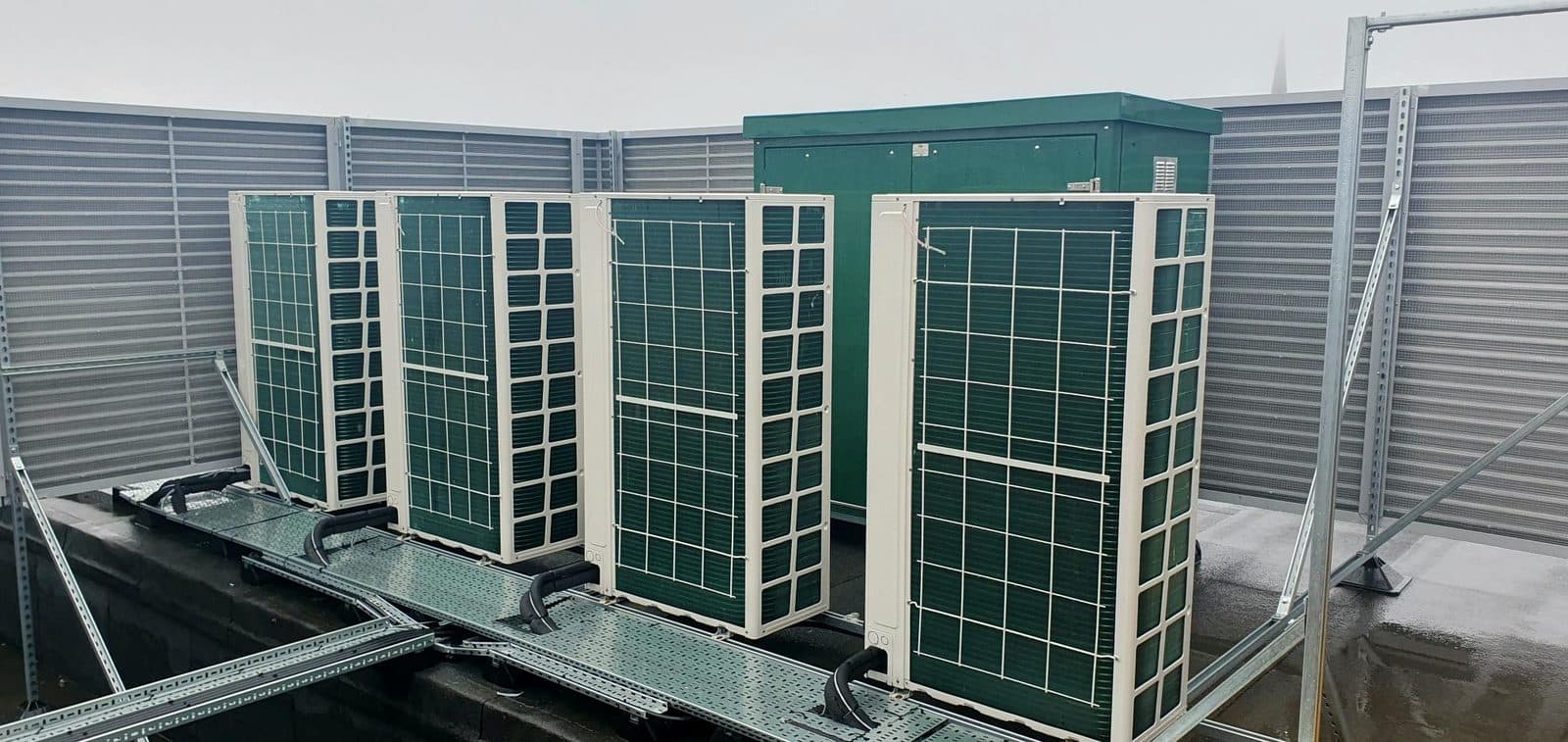
Chichester College Group’s estate includes Chichester College, Met College Brighton, Brinsbury, Haywards Heath and Worthing, all under one PPM contract. The estate includes rooftop VRF systems at Chichester College. After two decades on site, we know what is installed, how it performs and when it needs attention, which is how we plan work around timetables and holidays.
What the law and good practice require
- TM44CIBSE guidance used for the air conditioning inspection. Applies to systems with a combined effective rated output of more than 12kW.
- 5-year cycleInspections must be no more than five years apart, carried out by an accredited energy assessor, with the report lodged on the register.
- REFCOM F-GasF-Gas registered engineers for refrigerant handling, leak checks and records.
- SFG20PPM schedules for air conditioning, so tasks and records follow an industry standard.
- Manufacturer approvalApproved by Daikin, Mitsubishi and Samsung.
- CDM 2015Construction (Design and Management) Regulations: duties on installation projects and the health and safety file at handover.
More for school and college estates
Questions about air conditioning for schools
Do schools need air conditioning?
What type of air conditioning suits a classroom?
When is the best time to install air conditioning in a school?
Does a school need a TM44 air conditioning inspection?
How often is a TM44 inspection required?
What happens if a school does not have a TM44 report?
Can you maintain air conditioning we did not install?
If we’re not the right fit, we’ll tell you who is
Talk to us about air conditioning for your school
Your enquiry goes to our technical team. We call back within one working day.