
BB101 school ventilation: what it requires and what to do when a classroom fails it
BB101 (Building Bulletin 101) is the Department for Education’s guidance on ventilation, thermal comfort and indoor air quality in schools, and its main test for a classroom is CO2: a daily average below 1,000 ppm with mechanical ventilation, or below 1,500 ppm with natural ventilation, measured while the room is occupied. Rossair surveys classrooms against BB101, finds where ventilation and temperature fall short, and carries out the mechanical, hybrid or controls work to put it right, planned around term dates.
Ventilation surveys and fixes for school buildings
A BB101 survey compares what a room does in use with what the guidance asks for. BB101 itself recommends monitoring typical north, south, east and west facing classrooms and other key spaces, and recording temperature and CO2 through the building controls. We do the same: log CO2 and temperature in representative rooms, check the vents, openable windows, fans, air handling units and controls that feed them, and report room by room. The cause is often simpler than the school expects: a control set point, a failed damper, a blocked vent or a unit that was never serviced. Where a room cannot meet the target with the equipment it has, we cost the mechanical or hybrid option.
- CO2 and temperature logging in representative classrooms through the heating season and into summer
- Check of vents, openable windows, fans, air handling units and their controls
- Findings against the BB101 CO2 and overheating criteria, room by room
- Low-cost fixes first: control settings, repairs, cleaning and servicing
- Mechanical, hybrid or heat recovery ventilation retrofits where natural ventilation cannot meet the target
- Commissioning, BMS monitoring and handover records, so the result can be shown to be holding
What BB101 requires, and the guidance around it
Figures come from the 2018 edition of BB101, which GOV.UK still lists as current, and from DfE’s February 2026 guidance on ventilation and CO2 monitors. Recheck GOV.UK before you rely on any figure for a contract or a bid.
CO2 targets in teaching rooms
With mechanical ventilation, or a hybrid system running in mechanical mode, the daily average CO2 should be below 1,000 ppm while the room is occupied, and should not exceed 1,500 ppm for more than 20 consecutive minutes a day. With natural ventilation, or hybrid in natural mode, the limits are 1,500 ppm daily average and 2,000 ppm for no more than 20 consecutive minutes. Both apply at or below the design occupancy and are measured at seated head height. BB101 says these standards must be followed for a building to comply with it.
Ventilation rates
BB101 notes that in a typical classroom of 30 pupils and two staff, about 8 to 9 litres per second of outdoor air per person holds CO2 near 1,000 ppm, and 5 litres per second per person holds it near 1,500 ppm, in steady state. For science laboratories and preparation rooms over 70 m² the minimum exhaust rate is 4 l/s per m² of floor area, with a way to boost to at least 5 l/s per m². Art rooms and workshops need 2.5 l/s per m².
Science, D&T and food rooms
CO2 is allowed to rise higher during practical work, but gas-fired equipment has its own limits. Where a room has only Type A gas appliances such as Bunsen burners, BB101 sets a warning level of 2,800 ppm and an automatic gas shut-off at 5,000 ppm, taken from IGEM/UP/11. It also says openable windows alone are not an adequate way to control CO2 in these spaces. Fume cupboards sit inside the same ventilation design.
Fume cupboard testingClassroom temperatures in winter
BB101 recommends a normal maintained operative temperature of 20°C in teaching spaces during the heating season (1 October to 30 April), with a maximum of 25°C at full occupancy. Special schools and resourced provision for pupils with complex needs are set at 23°C, and circulation spaces, toilets and sports halls at 17°C. These are design values, measured at seated head height in the centre of the room, not legal limits.
Summer overheating
BB101 assesses overheating with the adaptive method in CIBSE TM52. The minimum requirement is that a room is 1°C or more above its adaptive threshold for no more than 40 hours between 1 May and 30 September, counting 9am to 4pm on weekdays. As an upper limit, no room should be more than 4°C above the threshold. BB101 says mechanical cooling should not normally be needed in general teaching spaces with ICT heat gains below 15 W/m², so shading, ventilation and night cooling come first.
Air conditioning for schoolsCO2 monitors in daily use
DfE’s guidance reads a monitor in three bands: under 800 ppm is good, 800 to 1,500 ppm is adequate and worth opening windows or doors for, and over 1,500 ppm is poor, so increase ventilation where you can. In cold weather it suggests partly opening windows and doors, opening higher windows to cut draughts, and airing rooms between uses, for example 10 minutes an hour. These bands manage a room day to day. They are a different test from the BB101 daily-average targets.
The law behind it
The Workplace (Health, Safety and Welfare) Regulations 1992 apply to schools. Regulation 6 requires every enclosed workplace to be ventilated by a sufficient quantity of fresh or purified air. Regulation 7 requires a reasonable temperature and says excessive effects of sunlight must be avoided. The School Premises (England) Regulations 2012 set no classroom temperature; they require premises to be maintained so that pupils’ health, safety and welfare are ensured so far as reasonably practicable.
Existing buildings
BB101 is written for new schools and refurbishments, and Approved Document F refers schools to it. For a building already in use, the legal duty comes from the Workplace Regulations. DfE states that its BB101 CO2 standards ensure compliance with regulation 6, which makes them the practical benchmark for an existing classroom.
When a mechanical or hybrid retrofit is worth it
Fix the cheap causes first: controls, repairs, cleaning, servicing. A retrofit is worth costing when rooms still exceed the target with everything working, when windows stay shut in winter because of draughts, noise or outdoor air quality, or when an over-glazed or ICT-heavy room overheats. Heat recovery limits the heating penalty; BB101 asks for room-based heat recovery units to reach a heat recovery efficiency factor of at least 75%. BB101 also says mechanical ventilation should not be the only summertime ventilation in occupied rooms.
Building management systemsFunding ventilation work
Ventilation that addresses a genuine building condition need can form part of a Condition Improvement Fund bid. We support CIF bids for heating, ventilation, water and electrical projects with a costed options appraisal and a fixed-price quote, then deliver the funded works.
Condition Improvement Fund bidsSchool and college ventilation we have designed and maintained
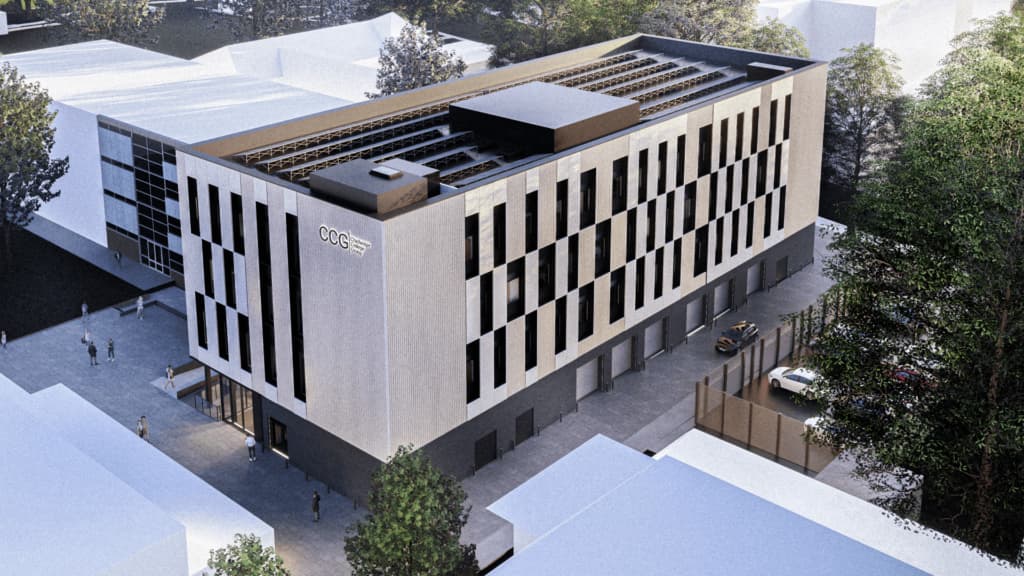
We have maintained the Chichester College Group estate for over 20 years, across 11 campuses including Chichester College, Brinsbury, Haywards Heath, Worthing and Met College Brighton, under one PPM contract. At Sacred Heart High School in Hammersmith we designed and installed the mechanical services and BMS for a science block with 10 laboratories and a four-court sports hall, including supply and extract ventilation and heat recovery, and we commissioned the sports hall natural ventilation.
Standards and guidance a school ventilation survey is judged against
- BB101DfE’s 2018 guidelines on ventilation, thermal comfort and indoor air quality in schools: CO2 targets, ventilation rates, temperatures and overheating criteria.
- Workplace RegsWorkplace (Health, Safety and Welfare) Regulations 1992: regulation 6 on ventilation and regulation 7 on a reasonable temperature and sunlight.
- Approved Doc FThe Building Regulations ventilation document, which refers schools to BB101.
- CIBSE TM52The adaptive thermal comfort method BB101 uses to assess summertime overheating in free-running rooms.
- DfE CO2 guidanceVentilation and air quality in education and childcare settings (February 2026): how to read a CO2 monitor and what to do at each band.
- School PremisesSchool Premises (England) Regulations 2012: premises maintained so pupils’ health, safety and welfare are ensured so far as reasonably practicable.
More for school and college estates
Questions about BB101 and school ventilation
What is BB101?
What CO2 level does BB101 allow in a classroom?
What is the minimum temperature in a school classroom?
What is the maximum temperature in a school classroom?
Does BB101 apply to existing schools?
How does a BB101 ventilation survey work?
When is mechanical or hybrid ventilation worth fitting to a school?
If we’re not the right fit, we’ll tell you who is
Talk to us about school ventilation
Your enquiry goes to our technical team. We call back within one working day.