

Legionella risk assessment and water hygiene for schools and colleges
A legionella risk assessment for a school finds where legionella bacteria could grow in the hot and cold water systems, including outlets that sit unused over the holidays, and sets out how to control them, as required by the HSE’s Approved Code of Practice L8. Rossair’s water hygiene team carries out the assessment and then runs the controls: monthly temperature checks, TMV servicing, tank cleaning and flushing before and after each break, with every record kept for your compliance file. We have maintained Chichester College Group’s estate for over 20 years, and Legionella Risk Assessment (LRA) compliance sits inside that PPM contract.
Legionella control that follows the school year
In England, the DfE’s Good estate management for schools guidance tells schools to appoint a competent person to take day-to-day responsibility, assess the risk to HSE’s L8, prepare a written scheme, and keep records that show the measures work. It adds that the risk assessment should be undertaken by a specialist company. That is the work we do. Our engineers survey the whole site, set up the monitoring, service the valves and tanks, and run the flushing round the term dates, so the people who run your school are not left to do it between lessons.
- L8 legionella risk assessment of the whole site, with a schematic and a prioritised action list
- Monthly temperature checks at sentinel outlets, logged and signed
- TMV servicing for pupil washrooms, early years and changing rooms
- Cold water tank inspection, cleaning and disinfection
- Flushing programmes before and after the school holidays
- Showerhead and hose cleaning for sports and changing facilities
- Remedial work, then a record you can hand to an inspector, insurer or governor
- Support for your competent person, whether that is a business manager or a site team lead
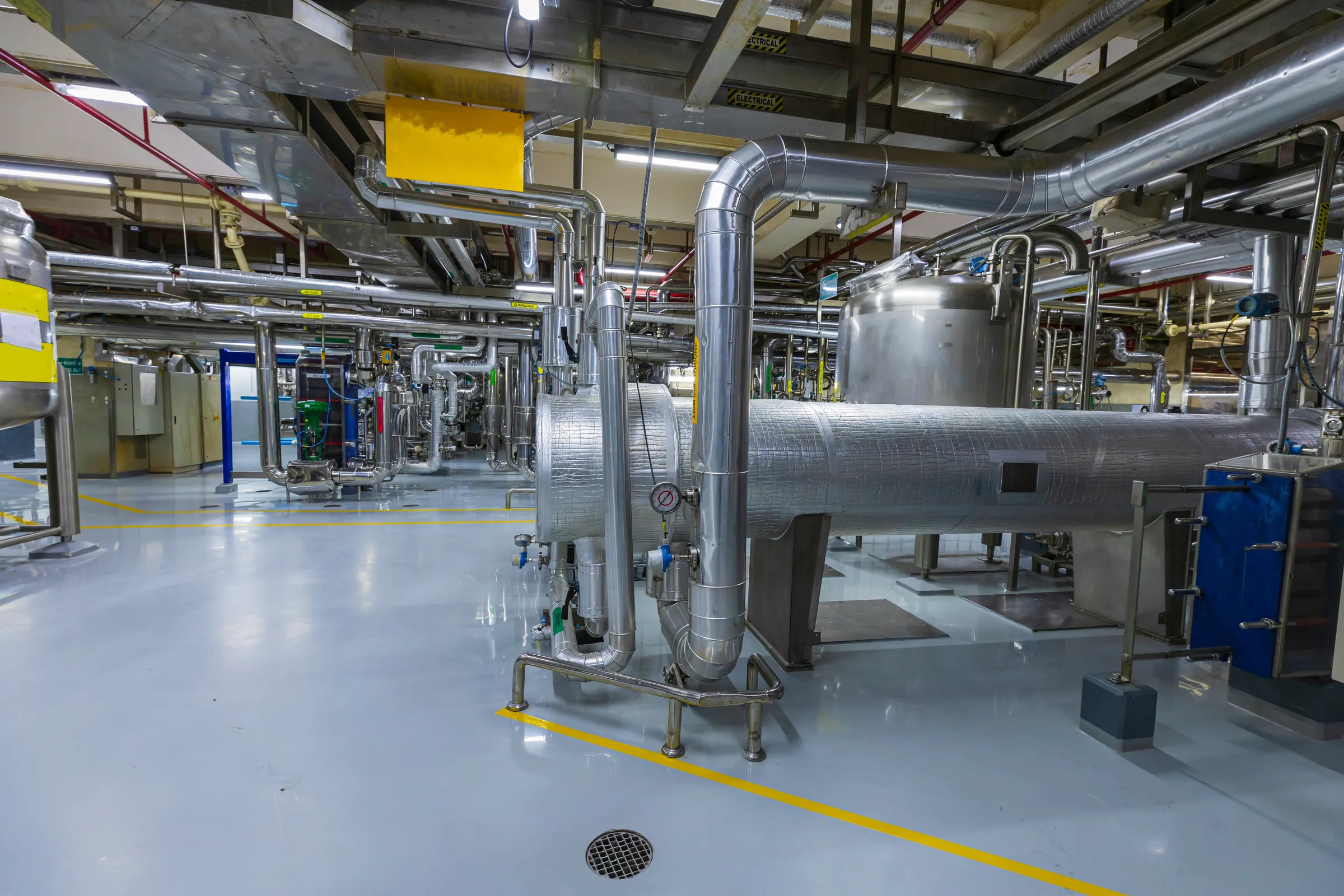
What school water hygiene covers
Figures and frequencies come from HSE’s technical guidance, HSG274 Part 2, and DfE’s Good estate management for schools. Your own risk assessment can set tighter ones for your site.
L8 risk assessment
The assessment covers every part of the water system that pupils and staff can reach or that feeds it: tanks, calorifiers, pipework, dead legs, washrooms, kitchens, science labs, changing room showers and any hose reels, which DfE says must be recorded in the assessment. Swimming and hydrotherapy pools are included where a school has them. You get the significant findings, a schematic and a prioritised action list, plus a review date.
Legionella risk assessments for commercial buildingsMonthly temperature checks
DfE notes that legionella is more likely to grow when cold water is above 20°C, hot water is below 50°C or water stagnates. HSG274 expects sentinel outlets to be checked monthly: hot water at 50°C or more within one minute, cold water below 20°C within two minutes. Our engineer takes the readings, logs them with the date and flags any outlet that is out of range for action before the next check.
TMV servicing in pupil washrooms and early years
Thermostatic mixing valves protect children from scalding, which is a risk above 44°C at the outlet. HSG274 says TMVs are required at appropriate outlets where there are very young people and the scalding risk is significant, and that blended water downstream of a valve can support legionella. TMVs need routine maintenance to the manufacturer’s instructions, with strainers and filters cleaned and descaled annually or as your risk assessment sets. We service, check and log every valve.
Tank inspection and cleaning
Cold water storage tanks are inspected annually, inside and out: a closely fitted lid, intact insect screens, sound insulation and a clean water surface. Where the inspection shows contamination or faults, we clean and disinfect the tank and rectify the defects. HSG274 warns that a tank oversized for the building’s current use can stagnate, so we check water consumption whenever the use of the building changes.
Flushing before and after the holidays
Outlets not used for seven days or more belong on a flushing regime. HSG274 gives weekly flushing for several minutes as the usual routine for infrequently used outlets, logged and sustained, because lapses can cause a critical rise in legionella. Where a regime lapses, stagnant water must be purged to drain, without creating aerosols, before the outlet is used. A summer break runs well past the two or three weeks HSG274 gives as the point at which cleaning, flushing and disinfection may be needed. We flush before closure, set the regime for the break where the building is empty, and flush again before pupils return.
Records for the GEMS compliance file
DfE asks schools to keep records and check that their measures are effective. We hold the risk assessment, written scheme, monthly temperature logs, flushing logs, TMV service records, tank inspections and remedial actions in one file, signed and dated. Under HSE guidance, monitoring and inspection records are kept for at least five years. When an inspector, insurer or auditor asks, the evidence is in one place.
Compliance for schools: the building services checklistYour competent person
DfE says the competent person can be a member of school staff, provided they have enough knowledge of the water system and the authority to deal with issues. We give that person the schematic, the monthly results, the flushing schedule and a plain list of what needs doing next, so they can act on the findings without reading a technical report cover to cover.
Chichester College Group: 11 campuses, one PPM contract
Chichester College Group is the education estate we know best. We have maintained it for over 20 years, including Chichester College, Met College Brighton, Brinsbury, Haywards Heath and Worthing, under one PPM contract scheduled to SFG20. Legionella Risk Assessment (LRA) compliance is part of that contract, so the checks run to the same calendar as the heating, ventilation and electrical testing rather than as a separate purchase. Contract clients also have 24/7 emergency cover.
What school water hygiene is assessed against
- L8HSE Approved Code of Practice (4th edition, 2013): risk assessment, a competent person, a control scheme and its review.
- HSG274 Part 2HSE technical guidance for hot and cold water systems: temperatures, monitoring, flushing, TMVs and tanks.
- GEMSDfE Good estate management for schools: appoint a competent person, use a specialist company for the assessment, keep records.
- SPR 2012School Premises (England) Regulations 2012, as cited by DfE: hot water at the point of use should not pose a scalding risk.
- HSWA and COSHHHealth and Safety at Work etc Act 1974 and COSHH Regulations 2002 put the duty on employers and those in control of premises.
- RecordsSignificant findings recorded where there are five or more employees. Monitoring and inspection records kept for at least five years.
More for school and college estates
Questions about water hygiene in schools
Do schools need a legionella risk assessment?
How often should water temperatures be checked in a school?
What should a school do with its water system over the holidays?
Does a school need TMVs on its taps?
Who is responsible for legionella control in a school?
What records does a school need to keep for legionella?
Do the assessments cover swimming pools, changing rooms and hose reels?
If we’re not the right fit, we’ll tell you who is
Talk to us about water hygiene for your school
Your enquiry goes to our technical team. We call back within one working day.