
Legionella risk assessments and water hygiene, with the records to prove it
A legionella risk assessment is a written assessment of a building’s hot and cold water systems that finds where legionella bacteria could grow and sets out how to control them, as required by the HSE’s Approved Code of Practice L8. Rossair’s water hygiene team carries out the assessment and then runs the controls it calls for: monthly temperature monitoring, legionella testing where it is needed, TMV servicing, tank inspection and cleaning, and flushing of little-used outlets. Every check is logged in one compliance pack.
Risk assessment, monitoring and remedials for commercial and public-sector buildings
If you employ people or control a building, you have a legal duty to prevent or control the risk of legionella in its water systems. That covers offices, schools and colleges, care homes, hospitals, hotels, retail units and industrial sites. Our engineers survey the system, assess the risk and write the scheme to control it. They then carry out the monthly checks, the servicing and the remedial work that scheme requires, so the assessment does not sit in a folder while the water systems drift. Findings, readings and actions are recorded as they happen, signed and dated.
- Legionella risk assessment to L8 and HSG274, with a schematic of the water system and a prioritised action list
- Written scheme and on-site log book setting out what is checked, how often and by whom
- Monthly temperature monitoring at sentinel outlets, with calorifier flow and return checks
- Legionella sampling and testing where the risk assessment calls for it
- TMV servicing, with strainers and filters cleaned and descaled
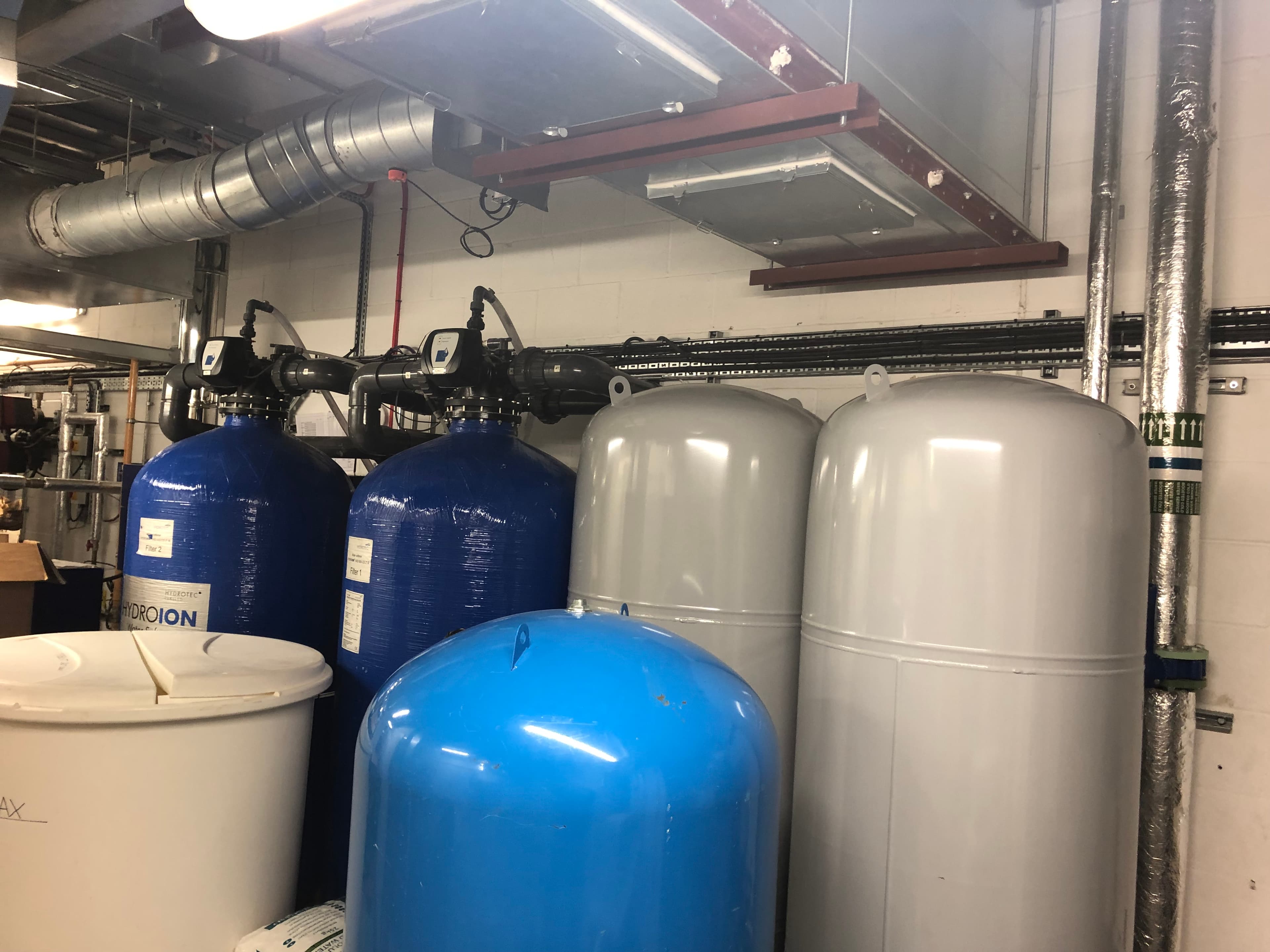
- Cold water tank inspection, cleaning and disinfection
- Flushing regimes for little-used outlets, and showerhead and hose cleaning
- Remedial work, then updated records for audits and insurers
How we control legionella, topic by topic
The figures and frequencies below come from the HSE’s technical guidance, HSG274 Part 2. Your risk assessment can set tighter ones for your building, and we write that into the scheme.
Legionella risk assessment (L8)
Duty holders must assess the risk under the Health and Safety at Work etc Act 1974 and COSHH, and L8 explains how. Our engineer surveys the hot and cold water systems, draws the schematic, identifies tanks, calorifiers, TMVs, dead legs and little-used outlets, and records the significant findings with a prioritised action list. The assessment is reviewed when the system or the use of the building changes, or when monitoring shows the controls are not working.
Written scheme and monthly monitoring
The written scheme sets out how the system is run and checked. HSG274 expects temperatures at sentinel outlets every month: hot water at 50°C or more within one minute of running (55°C in healthcare premises) and cold water below 20°C within two minutes. Calorifier flow is set as close to 60°C as practicable and never below it, with returns not below 50°C. Readings are logged with the engineer’s name and the date.
Legionella testing and sampling
HSG274 does not ask for routine sampling of every system. Testing is used where the risk assessment calls for it: where temperature or disinfectant controls are not being met, in higher-risk buildings such as healthcare, and after a suspected case. Samples are taken to BS 7592 and analysed in a UKAS-accredited laboratory. Above 100 cfu/l the system is resampled and the controls reviewed; above 1,000 cfu/l the review is immediate and disinfection is considered.
TMV servicing
Thermostatic mixing valves blend hot and cold water, typically to between 38°C and 46°C, to guard against scalding. The blended water downstream can also support legionella, so HSG274 expects regular routine maintenance by competent people to the manufacturer’s instructions, with strainers and filters inspected, cleaned, descaled and disinfected annually or as the risk assessment sets. We service each valve, check that Type 3 valves fail safe if the cold supply is interrupted, and log the result.
Water tank inspection and cleaning
HSG274 expects an annual inspection of every cold water storage tank, inside and out: a closely fitted lid, intact insect screens on overflows and vents, sound insulation and a clean water surface. Where the inspection shows contamination or faults, we clean and disinfect the tank and rectify the defects. Debris or signs of vermin mean the tank is inspected more often. Cleaning, flushing and disinfection to BS 8558 is also carried out after refurbishment or work that opens the system.
Flushing and remedial work
Outlets not used for seven days or more go on a flushing regime. HSG274 gives weekly flushing for several minutes as the usual routine for infrequently used outlets, and says it must be sustained and logged because lapses can cause a critical rise in legionella. Showerheads and hoses are cleaned and descaled quarterly or as fouling requires. Remedials include removing dead legs, repairing tanks and insulation, replacing TMVs and cleaning and disinfecting the system.
In schools and colleges
Schools and colleges carry the same duty, with extra pressure points: pupil washrooms and early years TMVs, showers and changing rooms, and outlets left unused through the holidays. Our school water hygiene page covers flushing around the school year and the records a school needs for its compliance file.
Water hygiene for schools and collegesWater hygiene scheduled with the rest of the estate
Legionella control only works if the monthly checks actually happen. We put water hygiene on the same PPM schedule as the rest of your plant, scheduled to SFG20, so the readings, tank inspections and TMV services are booked and chased alongside heating, ventilation and electrical testing. At Chichester College Group, whose estate we have maintained for over 20 years across 11 campuses under one PPM contract, Legionella Risk Assessment (LRA) compliance is part of that contract. Contract clients also have 24/7 emergency cover if a result or a failed system needs action out of hours.
What legionella control is assessed against
- L8HSE Approved Code of Practice (4th edition, 2013): risk assessment, a competent person, a control scheme and its review.
- HSG274 Part 2HSE technical guidance on controlling legionella in hot and cold water systems: temperatures, monitoring, flushing, TMVs, tanks and sampling.
- HSWA and COSHHHealth and Safety at Work etc Act 1974 and the COSHH Regulations 2002 put the duty on employers and those in control of premises.
- BS 7592Code of practice for sampling for legionella bacteria in water systems.
- BS 8558Cleaning, flushing and disinfection of hot and cold water services, for example after refurbishment or a long period out of use.
- RecordsSignificant findings recorded where there are five or more employees. Monitoring and inspection records are kept for at least five years.
Sectors we serve
Water hygiene alongside the rest of your maintenance
Questions about legionella risk assessments and water hygiene
What is a legionella risk assessment?
Is a legionella risk assessment a legal requirement, and who needs one?
What is an L8 risk assessment?
How often does a legionella risk assessment need reviewing?
Do I need legionella testing?
What temperatures should hot and cold water be kept at?
How often do TMVs and water tanks need servicing?
If we’re not the right fit, we’ll tell you who is
Book a legionella risk assessment
Your enquiry goes to our technical team. We call back within one working day.